Labor Day carries a reputation as the unofficial end of summer, but on San Diego’s water it’s better described as a hinge point. The county drew an estimated 32.4 million visitors in 2025, and Labor Day weekend is consistently one of the busiest stretches on that calendar — the San Diego Tourism Authority’s own guide to the holiday leads with wide-open beaches and bayside activity as the draw. It’s also, less obviously, one of the last reliable weekends of the year to catch blue whales before the season quietly shifts toward fall migrants.
We run the Peregrine, an 82-foot vessel out of H&M Landing near Shelter Island, and Labor Day is one of our busiest weekends specifically because it sits at the tail end of blue whale season and the start of a much calmer, less crowded fall. Timing a trip around that overlap is one of the more useful things a first-time visitor can know before booking.
The Misconception That Costs People a Good Trip
Most people assume Labor Day marks the end of “whale season” in San Diego the same way it marks the end of summer generally. That’s backwards, and it’s the kind of assumption that leads people to skip booking a trip they’d have actually enjoyed.
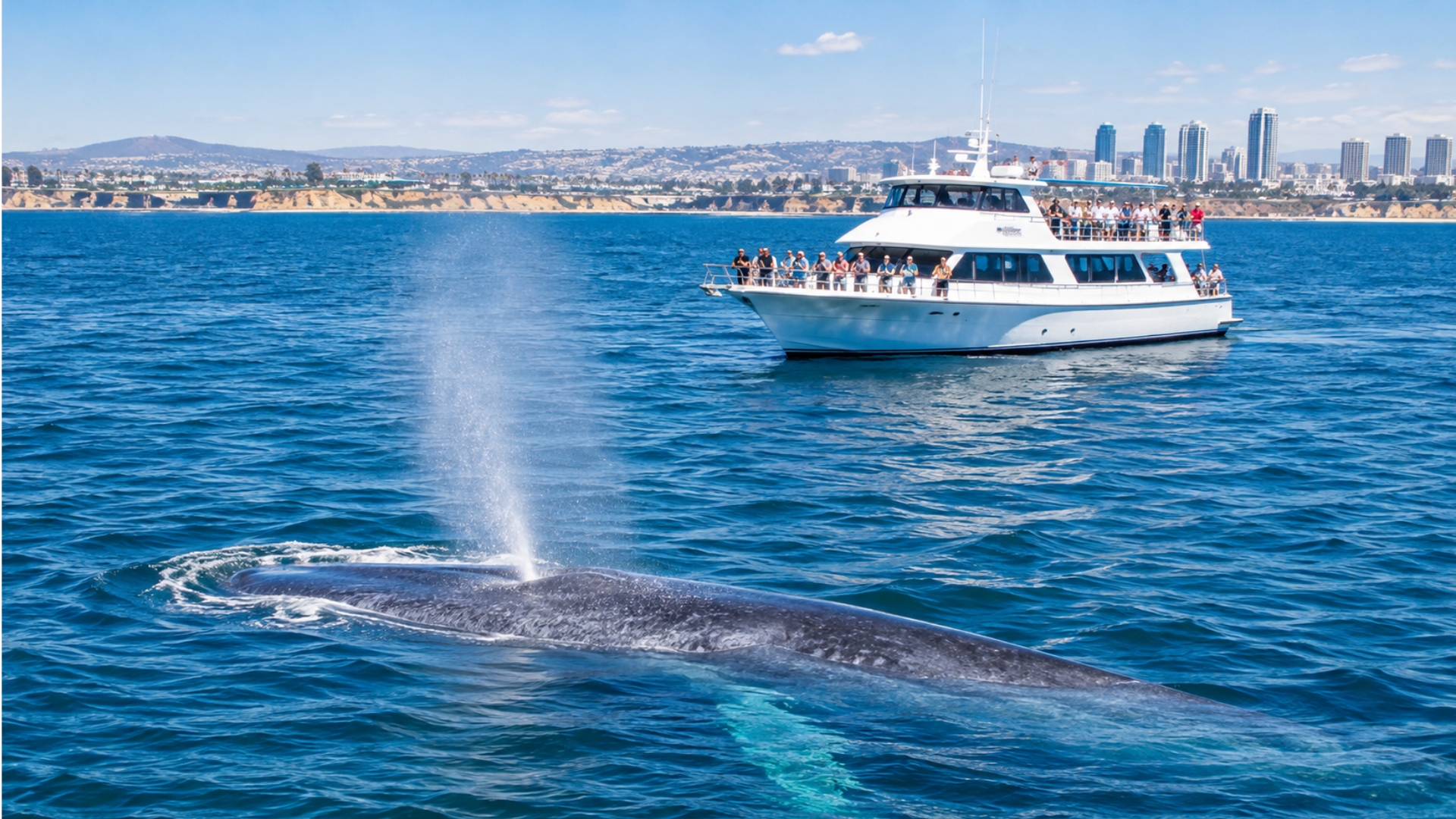
Blue whales, the largest animals to ever exist on Earth, don’t leave San Diego waters when summer technically ends. Multiple regional operators and marine researchers place the blue whale window at roughly June through October, with sightings sometimes extending into November, driven by krill availability rather than the calendar. Labor Day weekend falls squarely inside that window, not at its edge — meaning a trip booked specifically because “it’s the last weekend of summer” can still land guests in front of a 100-foot animal without any special luck involved.
Why the Season Doesn’t End on the Holiday
The reason blue whales stick around past Labor Day comes down to food, not temperature. Blue whales migrate to San Diego to feed on dense krill blooms concentrated in the region’s submarine canyons, and researchers at Scripps Institution of Oceanography have found that the whales use the previous year’s ocean temperatures as a cue for krill availability rather than a fixed calendar date. As long as the krill holds, the whales tend to stay, which is why late-season sightings in September are common rather than exceptional.
When to Go, and Why Labor Day Specifically Works
There’s no single “right” week to visit San Diego’s water in late summer, but Labor Day weekend has a specific combination of advantages worth understanding honestly, trade-offs included.
The week of Labor Day itself. This is peak blue whale season, with krill blooms typically still active and daylight long enough for full-length trips. The trade-off: it’s also one of the most heavily visited weekends of the year regionally, so public tours, restaurants, and parking near the water fill up fast — booking ahead matters more here than almost any other week of summer.
The two weeks after Labor Day. Crowds thin out noticeably as the traditional “summer” window closes on the calendar, even though blue whale conditions haven’t meaningfully changed. This is often the better-kept secret: similar sightings odds, smaller crowds, and typically softer pricing on hotels and charters.
October into November. Blue whale sightings taper off as krill availability declines, but humpback whales remain active and fin whales and minke whales are present essentially year-round in San Diego waters. It’s a reasonable fallback if Labor Day itself doesn’t work with your schedule, though it comes with lower odds of a blue whale specifically.
What We Offer, and Where the Limits Are
We’re a small, locally owned operation, and our approach to a holiday weekend like Labor Day is shaped by over 40 years of combined experience running boats in California’s busiest whale watching markets. You can read more about our story and crew here.
The Boat, and Why It Matters on a Crowded Weekend
The Peregrine is 82 feet long, Coast Guard-certified for up to 146 passengers, and outfitted with Tohmei anti-rolling gyro stabilizers — a rarity among whale watching vessels in San Diego — along with air-conditioned indoor seating, a full galley, and clean restrooms. On a busy holiday weekend specifically, that size and stability matter more than usual: bigger crowds mean fuller boats, and a stabilized, spacious vessel keeps that from turning into a cramped, uncomfortable trip. Full specifications are on our vessel page.
What We’re Honest About
Labor Day weekend brings some of the highest demand of the year, and public tour departures can sell out days in advance. What we can’t do: guarantee a specific species on a specific date, since whales are wild animals and blue whale activity can shift week to week based on krill conditions we don’t control.
Our sightings guarantee, a free return trip if you don’t see a whale, is how we handle that honestly rather than overpromising a guaranteed encounter on what is, for many guests, a once-a-year trip.
What to Expect Beyond the Whale Watching
A Labor Day trip on the water is rarely just about whales, and the holiday itself adds a few extra layers worth planning around. Boarding typically starts 15-20 minutes before departure at H&M Landing, close enough to Shelter Island’s restaurants and waterfront that a trip can anchor a full day out rather than standing alone.
Once underway, expect running narration from the crew on whatever’s actually active that day — blue whales if krill conditions cooperate, but also common dolphins in pods that can number into the dozens, sea lions, and seabirds regardless of whale activity.
Because Labor Day weekend draws heavier boat traffic across the bay generally, from recreational boaters to other tour operators, trips can feel a bit busier on the water itself even when the boat isn’t full — part of the tradeoff of visiting during one of the year’s most popular weekends. Layers are worth packing even in early September, since it’s noticeably cooler on open water than on shore, especially once the boat picks up speed heading offshore.
Why the Rules Matter Most on the Busiest Weekend
Federal law requires vessels to maintain a minimum distance from whales and prohibits chasing or cutting off their path, and those rules carry extra weight on a weekend when the water is at its most crowded. More boats on the water increases the chance of accidental close encounters or repeated disturbance to the same animals, which is exactly the scenario the distance requirements exist to prevent.
The U.S. Coast Guard specifically flags Labor Day as one of the busiest weekends of the year on U.S. waterways, and California State Parks’ Division of Boating and Waterways echoes that warning for the state’s own lakes and coastline, urging boaters to stay alert given the increased activity on the water. A crew that keeps proper distance and stays vigilant on a crowded weekend isn’t just following the law — it’s protecting both the wildlife and the safety of everyone sharing the water that day.
Planning Your Labor Day Trip
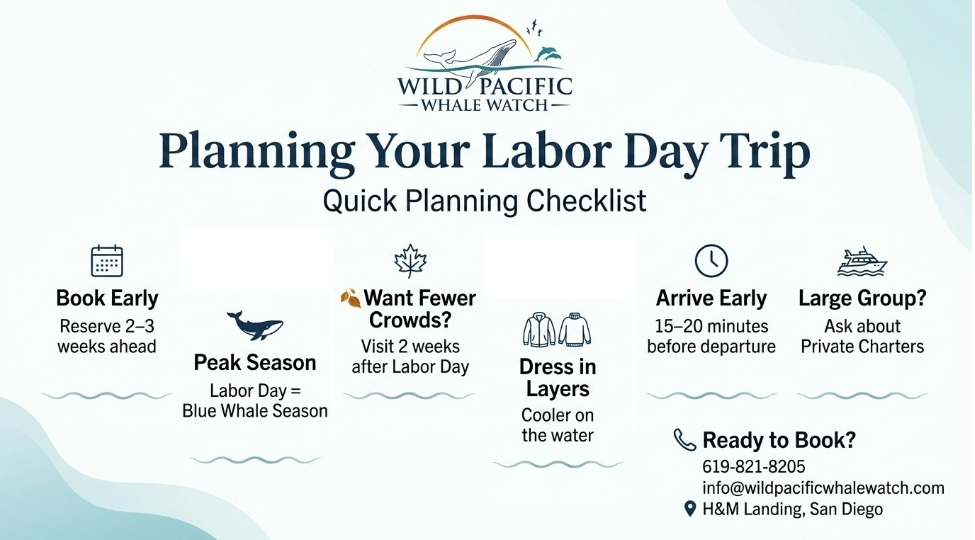
Labor Day weekend books up earlier than most people expect, precisely because it overlaps with peak blue whale season and one of San Diego’s busiest tourist weekends at the same time. A simple checklist for planning:
- Book at least 2-3 weeks ahead for Labor Day weekend itself; public departures on peak dates can sell out well in advance
- Consider the two weeks immediately after Labor Day if you want similar sightings odds with smaller crowds and easier parking
- Dress in layers regardless of the warm weather on shore, since open water is consistently cooler
- Arrive 15-20 minutes before departure to account for holiday-weekend traffic near Shelter Island
- Ask about private charters if your group is large or you want to avoid sharing the boat during peak demand
To check availability or book ahead of the holiday, reach us at 619-821-8205 or info@wildpacificwhalewatch.com, or browse our whale watching page for trip details. We depart from H&M Landing at 2803 Emerson St., San Diego, and our FAQ page covers additional booking questions.
Frequently Asked Questions
Is Labor Day too late in the season to see blue whales?
No — blue whale season in San Diego typically runs through October, sometimes into November, so Labor Day weekend falls well within the active window rather than at its edge. Sightings depend on krill availability that particular week, not the calendar date itself.
How far in advance should I book a Labor Day whale watching trip?
Two to three weeks is a reasonable minimum, since this is one of the busiest tourist weekends of the year in San Diego and public departures can sell out. Private charters typically need similar or slightly longer lead time for a holiday weekend.
Is the water more crowded on Labor Day weekend?
Yes. Boat traffic across San Diego Bay and offshore waters increases noticeably during Labor Day weekend, alongside the general spike in visitors to the region, so expect more activity on the water even if your own boat isn’t full.
Are there safety concerns specific to Labor Day boating?
The U.S. Coast Guard and California State Parks both flag Labor Day as one of the busiest and higher-risk weekends for recreational boating nationally, largely due to increased traffic and alcohol-related incidents on personal watercraft. Commercial whale watching vessels operate under stricter safety and licensing requirements than private recreational boats, which is worth confirming with any operator you choose.
What if we don’t see a blue whale on our trip?
We offer a free return trip if no whales are sighted on your outing. Wildlife sightings can’t be guaranteed regardless of season, and a responsible operator will say so rather than overpromise on a busy holiday weekend.
Should we go the week after Labor Day instead?
It’s worth considering. Sightings odds for blue whales remain similar in the two weeks following the holiday, while crowds at the dock, on the water, and in nearby restaurants typically thin out noticeably.
What should we bring for a Labor Day trip?
Layers, even though it’s warm on shore — open water is consistently cooler, especially once underway. Sunscreen, sunglasses, and a camera round out the basics, along with any motion sickness remedy taken before boarding if needed.
Can we combine whale watching with other Labor Day activities in San Diego?
Yes — H&M Landing sits near Shelter Island’s restaurants and waterfront attractions, making it easy to build a whale watching trip into a longer day out rather than treating it as a standalone activity.
Ready to Close Out Summer on the Water
Labor Day weekend is one of San Diego’s busiest, but it’s also one of the last dependable windows to see a blue whale before the season quietly winds down — a combination worth planning around rather than assuming you’ve missed.
If you want to close out summer with whales, dolphins, and open water rather than just a crowded beach, call us at 619-821-8205 or email info@wildpacificwhalewatch.com to book your Labor Day trip.