
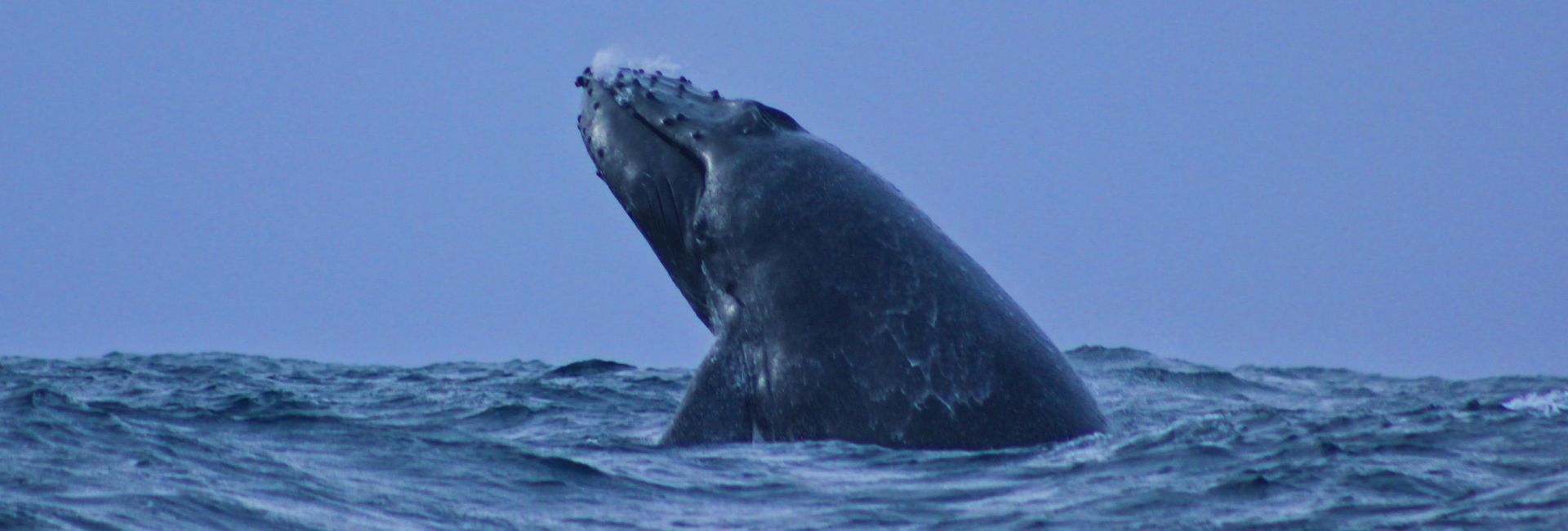
Blue whale watching in San Diego puts you in front of the largest animal that has ever lived, surfacing a short boat ride from one of the busiest harbors on the West Coast. For a few months each summer, these giants gather to feed in the waters off the coast, and San Diego is one of the most reliable places on the West Coast to see them.
If you have only ever seen a blue whale in a documentary, the size is hard to believe in person. A big one stretches to 100 feet and weighs as much as 400,000 pounds. Watching one rise, exhale a column of mist thirty feet into the air, and slip back under is the kind of thing people remember for the rest of their lives.
This guide covers when blue whales arrive, where they go, how to recognize one on the water, and how to give yourself the best odds of a sighting. Wild Pacific Whale Watch runs daily whale watching tours out of San Diego, so once you know what to look for, the trip itself is easy to arrange.
When Is Blue Whale Season in San Diego?
Blue whales appear off San Diego from roughly mid May through September, with the heart of the season falling across the summer months. They follow their food, and California’s summer brings dense blooms of krill to the offshore waters where these whales feed.
This is the reverse of the region’s other famous season. Gray whales pass the coast in winter and spring, from December through April, so the two rarely overlap. If your goal is specifically a blue whale, summer is the window, and it lines up neatly with school holidays and the calmest seas of the year.
Timing within the season matters less than people assume. Blue whales are present throughout, and the sightings log from recent trips is the best guide to what the water has been doing in any given week.
Why Blue Whales Come to San Diego
Blue whales travel to San Diego for one reason: food. NOAA Fisheries reports that the largest individuals can eat up to six tons of krill in a single day. A 2021 study of the eastern North Pacific population that visits California put the figure even higher, estimating an adult consumes around sixteen metric tons daily during foraging season. A whale that size needs a reliable feast, and the summer krill blooms off Southern California deliver it.
The whales you see off San Diego belong to that eastern North Pacific stock. They spend winters in warmer waters off Mexico and Central America, then move north to feed along the U.S. West Coast through summer and fall. San Diego sits at the southern end of that feeding range, which is part of why the season starts here a little earlier than it does farther north.
Understanding the food is also the key to finding the whales. Where the krill concentrates, the blue whales follow, and an experienced crew uses water conditions and recent activity to point the boat toward the day’s best odds.
How to Recognize a Blue Whale on the Water
Once you know the signs, a blue whale is one of the easier species to identify, because everything about it is oversized.
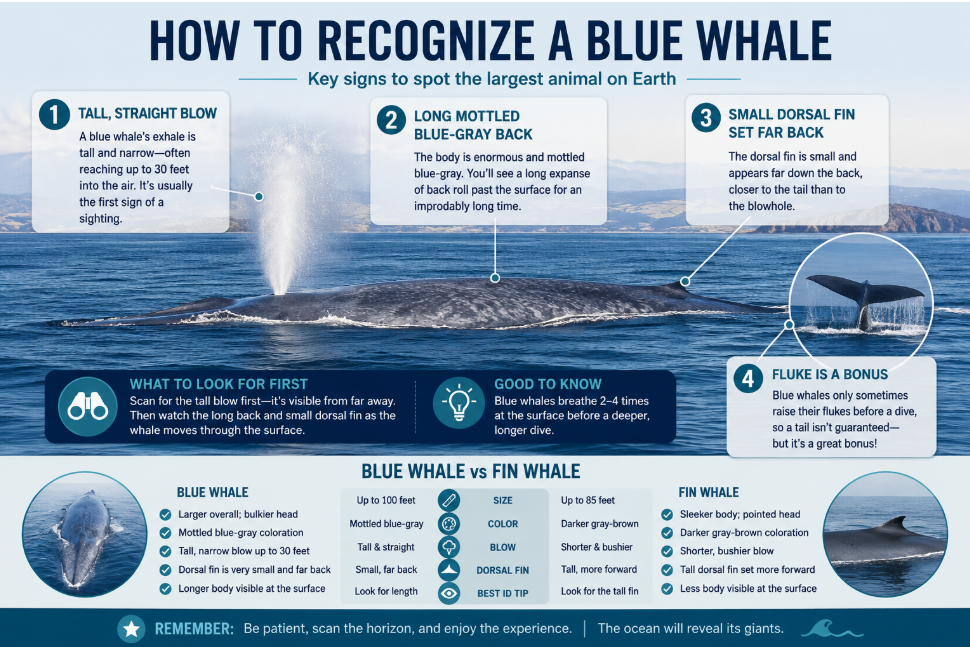
The blow comes first. A blue whale’s exhale is a tall, slender column that can reach thirty feet, taller and straighter than the bushy blow of a gray whale. On a calm day, you can see it from a long distance, which is often how a sighting begins.
Then comes the back. A long, mottled blue-gray expanse of body rolls past the surface for an improbably long time before a surprisingly small dorsal fin appears near the tail end. That length of body between blowhole and fin is the real giveaway.
One thing not to count on is the tail. Unlike humpbacks, blue whales only sometimes lift their flukes before a dive, so a raised tail is a bonus rather than a guarantee.
What Else You Will See Offshore
A summer trip is rarely a single-species affair. The same waters that draw blue whales support a wide cast of marine life.
Up to six species of dolphins live in or pass through these waters, often in large pods that ride the bow wake and put on a show between whale sightings. Fin whales, the second-largest animal on Earth, also feed off San Diego in summer and are sometimes mistaken for blues at a distance.
Sea lions are a near constant along the coast and bay, and the crew has a full guide to them in San Diego if that interests you. Even on a quieter whale day, the supporting wildlife tends to fill the trip.
How to Get the Best Blue Whale Sighting
A few choices stack the odds in your favor.
Pick the right boat. The Peregrine, the 82-foot yacht operated by Wild Pacific Whale Watch, cruises at 25 knots, which gets you out to the offshore feeding zones faster and leaves more of your 3 to 3.5 hour trip for time with the whales. Speed is the difference between reaching a distant report and watching it slip away.
Plan around seasickness before it happens. Blue whales feed well offshore, and that open water can be a problem for some passengers. The Peregrine carries Tohmei anti-rolling gyro stabilizers that sharply reduce rolling motion, along with air-conditioned indoor seating, to keep the trip comfortable. You can read more about the vessel and how it is set up for long offshore runs.
Lean on the crew. Wild Pacific’s owner-operators bring over 40 years of combined experience from San Diego and Monterey Bay, and that experience shows in where they take the boat and how they read the water. Their background is laid out in what sets them apart.
See the Largest Animal on Earth This Summer
Blue whale watching in San Diego is a narrow window on a rare animal, and it opens for only a few months a year. From mid-May through September, the largest creature that has ever lived feeds within reach of the harbor, and a fast, stabilized boat with a seasoned crew is the surest way to meet one.
Wild Pacific Whale Watch runs daily trips from H&M Landing near Shelter Island, minutes from San Diego Airport, and backs them with a guarantee: if you do not see a whale, your next trip is free. Book your blue whale watching tour and find out what the season has brought in this week.
Frequently Asked Questions
When is the best time for blue whale watching in San Diego?
Blue whale season in San Diego runs from mid-May through September, with summer offering the most activity and the calmest sea conditions. This is separate from gray whale season, which runs December through April. For blue whales specifically, a summer trip gives you the strongest odds.
How big are the blue whales off San Diego?
Blue whales are the largest animals that have ever lived, reaching up to 100 feet long and around 400,000 pounds. The whales off San Diego belong to the eastern North Pacific population, which feeds along the California coast through summer and fall. Even an average adult dwarfs every other animal in the ocean.
Are you guaranteed to see a blue whale?
No tour can guarantee a specific species, because blue whales are wild animals that follow their food. Wild Pacific Whale Watch does guarantee a whale sighting, though, and if you do not see one, your next trip is free. Summer is the peak window for blue whales specifically.
How far offshore do you go to see blue whales?
Blue whales feed in offshore waters where krill concentrates, so trips often travel several miles out, farther than a typical bay cruise. The Peregrine cruises at 25 knots to reach these zones quickly, leaving more of the 3 to 3.5 hour trip for actual viewing. Its gyro stabilizers help keep the open water ride comfortable.
What is the difference between a blue whale and a fin whale sighting?
Blue whales and fin whales both feed off San Diego in summer and can look similar from a distance, which is a common point of confusion. Blue whales are larger, show a mottled blue-gray body, and have a very small dorsal fin set far back. Fin whales are slightly smaller, darker gray, and show their dorsal fin sooner after the blow.