
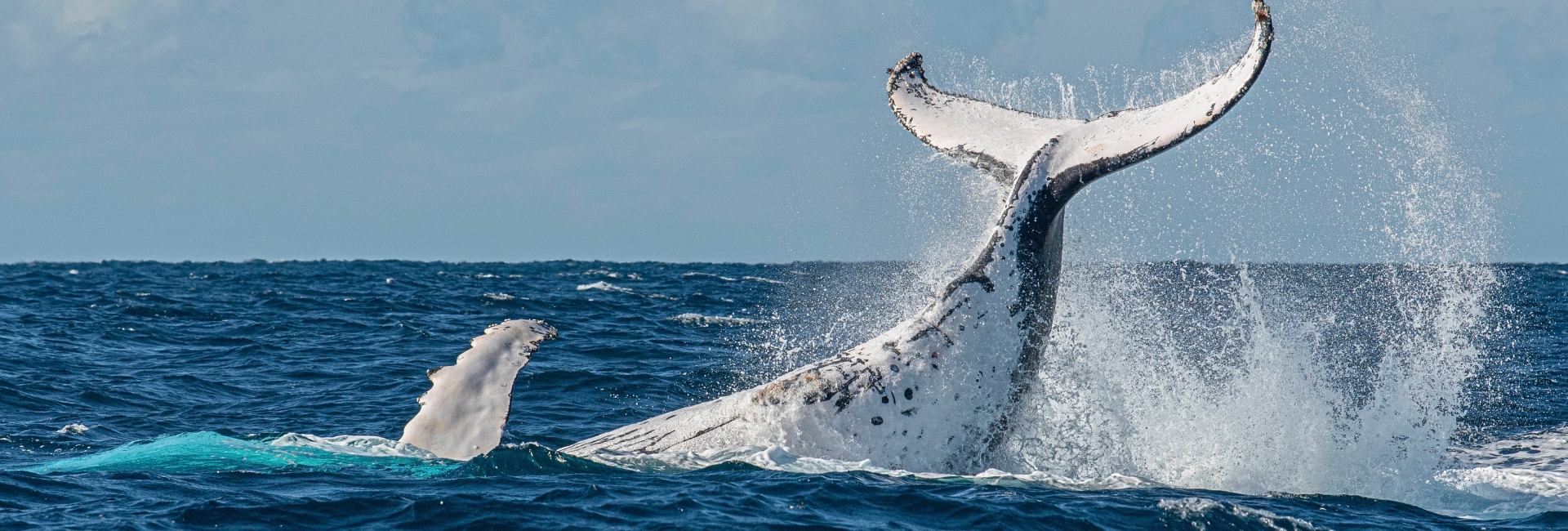
San Diego’s unique position along the Pacific migration corridor makes it one of the world’s premier whale watching destinations. With year-round whale presence and multiple species passing through its waters, understanding the seasonal patterns transforms good trips into extraordinary wildlife encounters.
This guide breaks down when to visit, what you’ll see, and how to maximize your chances of witnessing these magnificent creatures. When you’re ready to experience it yourself, Wild Pacific Whale Watch offers year-round tours designed for comfort and optimal sightings.
Understanding The Year-Round Opportunities For The Whale Watching Season in San Diego:
San Diego sits directly along major whale migration routes between Arctic feeding grounds and warm-water breeding areas. Unlike many coastal destinations with single-season activity, San Diego offers year-round whale watching opportunities with different species present throughout every season.
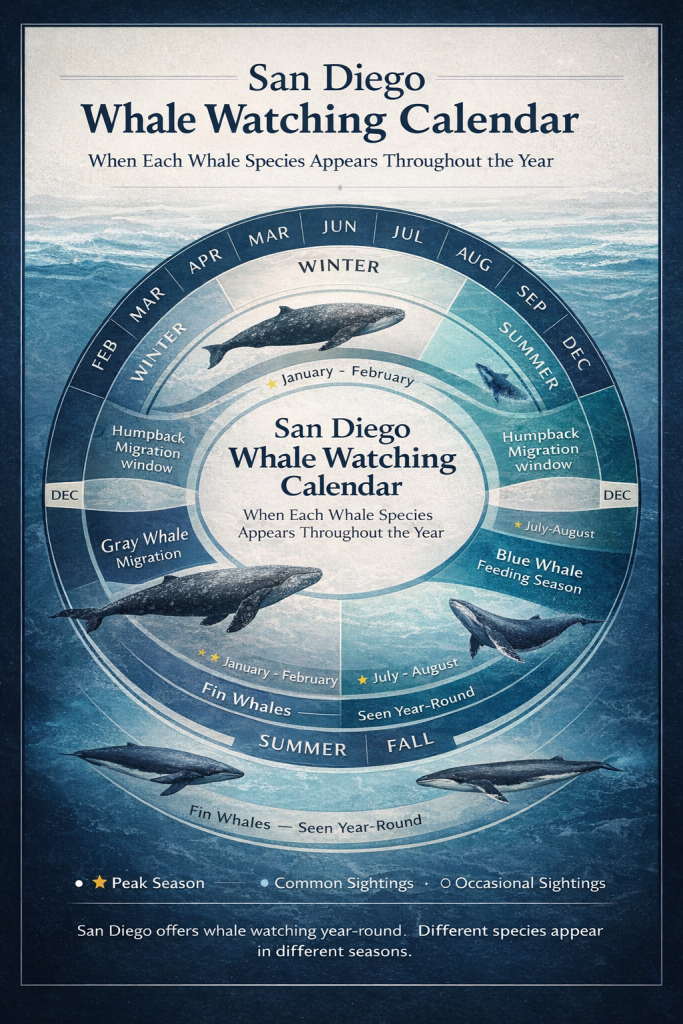
Two primary seasons define the calendar: December through April, when approximately 20,000 gray whales migrate past San Diego’s coast, and June through September, when blue whales, the largest animals ever to exist, feed on dense krill concentrations offshore. In between and beyond these windows, fin whales, minke whales, and humpbacks are seen year-round, ensuring remarkable sightings no matter when you visit.
This year-round presence, combined with mild weather and diverse marine ecosystems, establishes San Diego as a top-tier whale watching destination. Learn more about what sets San Diego whale watching apart from other destinations.
When Is Whale Watching Season in San Diego?
Winter and Early Spring Season (December-April)
Gray whale migration dominates the winter months, with peak activity from January through February. Whales travel southbound from Alaska to Baja California breeding lagoons (December-February), then return northbound with newborn calves (March-April).
Winter temperatures range from 50-65°F, with calm seas and excellent visibility typical of San Diego’s mild climate. January and February offer the highest concentration of gray whale sightings, with multiple whales often visible simultaneously during peak migration weeks. Mother-calf pairs appear in March and April, swimming closer to shore for protection, creating exceptional viewing opportunities.
Summer Season (June-September)
Blue whales arrive in summer, feeding on massive krill blooms that concentrate in the submarine canyons off San Diego’s coast. These giants can reach 100 feet in length and weigh up to 200 tons. Summer ocean temperatures climb to 65-70°F, with consistently calm seas ideal for offshore excursions.
Fin whales, minke whales, and humpback whales are not just summer visitors, they can be seen in San Diego waters year-round. This means that every season presents an opportunity to encounter multiple whale species on a single trip.
Transition Months (October-November, March-April)
Spring and fall transitions bring humpback whale sightings alongside lingering or arriving seasonal species. These months offer unique opportunities to see multiple whale species on single tours. Humpbacks are known for acrobatic breaching displays and complex vocalizations, adding dramatic surface behaviors to whale watching experiences.
Types of Whales You’ll See in San Diego
Gray Whales (The Winter Stars)
Gray whales make one of nature’s longest migrations, traveling 10,000-12,000 miles annually between Arctic feeding grounds and Baja California breeding lagoons. These 40-50-foot whales are distinguished by mottled gray skin, barnacle coverage, and distinctive heart-shaped blows visible from a distance. Gray whales travel close to shore, making them accessible to both boat tours and land-based observers during peak season.
Blue Whales (The Summer Giants)
Blue whales are the largest animals ever known, reaching lengths up to 100 feet and weights exceeding 200 tons. They feed almost exclusively on krill, consuming up to 4 tons daily. Summer brings blue whales to California’s nutrient-rich waters, where upwelling creates ideal feeding conditions. Their massive size and distinctive mottled blue-gray coloring make sightings unforgettable.
Humpback Whales
Humpback whales pass through San Diego waters during spring and fall migrations, known for spectacular breaching, tail-slapping, and pectoral fin displays. These 40-50-foot whales are highly vocal, producing complex songs audible even above water. Peak humpback sightings occur March-May and September-November as they transit between feeding and breeding grounds.
Other Species
Fin whales (the second-largest whale species), minke whales, and occasionally orcas appear in San Diego waters. Fin whales reach 70 feet and often travel in small groups during the summer feeding season. Minke whales, the smallest baleen whales at 25-30 feet, appear year-round but most commonly during summer. Orca sightings, while rare, occur primarily in the winter months.
Best Times for Whale Watching in San Diego
Peak Season (January-February)
These months offer the highest gray whale concentrations, with calm seas, mild weather, and excellent visibility. Tours during peak season frequently spot multiple whales per trip. Weekday tours typically have fewer passengers than weekends, though whale activity remains consistent throughout the week.
Early Season (December)
The initial gray whale migration begins in December as whales travel close to shore, making the early season ideal for land-based viewing and shorter boat trips. December sees fewer tourists, offering more intimate tour experiences while maintaining strong sighting rates.
Late Season (March-April)
Northbound gray whales return with newborn calves, swimming closer to shore for safety. Mother-calf pairs create touching scenes and excellent photography opportunities. Late season extends viewing into spring when the weather becomes increasingly mild and predictable.
Best Times of Day
Morning departures offer the calmest seas before afternoon winds pick up, and the quality of light makes for excellent photography with minimal glare. That said, whale activity occurs consistently throughout daylight hours, so afternoon tours are equally productive for sightings.
During summer months, Wild Pacific Whale Watch also runs sunset departures, offering a stunning way to watch blue whales feed against the backdrop of a Pacific sunset. It’s one of the most memorable ways to experience San Diego’s offshore waters.
Planning Your San Diego Whale Watching Adventure
Choosing a Tour Operator
Wild Pacific Whale Watch operates from H&M Landing aboard the Peregrine, an 82-foot vessel equipped with twin Tohmei anti-rolling gyro stabilizers that dramatically reduce seasickness. Expert naturalist guides provide marine biology education while the climate-controlled vessel ensures comfort in all conditions.
Look for operators with experienced crews, strong safety records, and commitments to responsible wildlife viewing. Reputable operators maintain proper distances from whales, follow NOAA guidelines, and prioritize animal welfare over close encounters. Many offer sighting guarantees or return vouchers, reflecting confidence in seasonal patterns and expertise.
What to Bring and Wear
Layer clothing even during warm months, ocean temperatures remain cooler than land, and wind chill on moving vessels drops perceived temperatures significantly. Bring sunscreen (UV reflection increases over water), sunglasses, and binoculars for distant sightings.
Motion sickness medication should be taken 30-60 minutes before departure for sensitive individuals, though modern stabilization technology minimizes this concern. For a complete packing guide, see what to bring for whale watching.
Cameras with zoom capabilities capture memorable moments, though experiencing whales directly often proves more rewarding than viewing through screens. Comfortable, non-slip shoes are essential for moving around wet decks safely.
Physical Requirements and Considerations
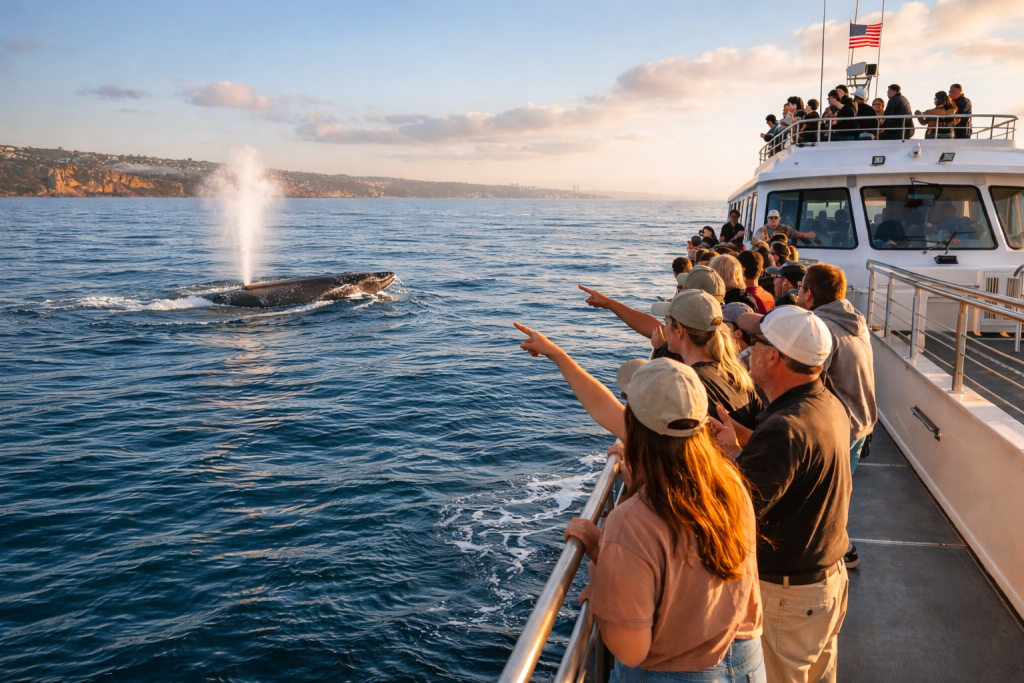
Tours typically last 3-4 hours, requiring moderate stamina to remain on boats during this period. Most vessels accommodate various fitness levels with indoor seating, restrooms, and climate control.
Families with children, elderly guests, and individuals with mobility considerations can participate comfortably on well-equipped vessels. Consult with operators about specific accessibility needs when booking.
Where to Watch Whales in San Diego
Guided Boat Tours (Best Option)
Boat tours provide the closest encounters, expert guidance, and highest sighting success rates. Multiple operators depart from San Diego Bay and Mission Bay, with tours venturing 3-15 miles offshore depending on season and species.
Professional naturalists identify individual whales, explain behaviors, and share conservation context that enriches the experience. Explore Wild Pacific Whale Watch’s vessel, the Peregrine, to see how modern stabilization technology enhances comfort.
Ready to experience San Diego’s incredible whale watching season? Book your tour with Wild Pacific Whale Watch for the most comfortable and educational whale watching experience in San Diego.
Shore-Based Viewing Locations
Cabrillo National Monument offers elevated vantage points 300 feet above the ocean, ideal for spotting gray whale blows during peak migration. Point Loma provides accessible coastal trails with panoramic ocean views.
Torrey Pines State Reserve, La Jolla Cove, and Birch Aquarium at Scripps Institution of Oceanography all offer land-based viewing during peak season, though sightings are more distant and less frequent than boat-based tours.
Whale Migration Explained
The Gray Whale Migration Route
Gray whales travel from Arctic feeding grounds in the Bering and Chukchi Seas to breeding lagoons in Baja California, Mexico, a round-trip journey of 10,000-12,000 miles annually. They follow the coastline for navigation and safety, passing San Diego southbound December-February and northbound March-April. This migration represents one of the longest of any mammal species.
Breeding and Calving Patterns
Gray whales migrate to warm, protected lagoons where females give birth after 13-month gestations. Calves nurse for 7-8 months, gaining weight rapidly before the return journey north. Mother-calf pairs travel slowly and close to shore, making late-season (March-April) prime viewing time for observing this bond.
Blue Whale Migration Patterns
Blue whales follow prey concentrations rather than fixed routes, arriving in California waters when krill blooms reach peak density. Summer upwelling brings nutrient-rich cold water to the surface, supporting massive krill populations that attract blue whales from June through September.
These temperature-driven movements mean blue whale presence varies more than gray whale migrations. For insights into the best times to see specific species like dolphins in San Diego, seasonal ocean conditions play an equally important role.
Frequently Asked Questions
What is the best time to go whale watching in San Diego?
January and February offer peak gray whale sightings during the southern migration. For blue whales, visit June through September. Each species has optimal seasons based on migration patterns, with year-round opportunities for various species.
Can I see whales year-round in San Diego?
Yes. Gray whales dominate December-April, blue whales appear June-September, and humpbacks transit during spring and fall. Different species ensure year-round whale watching opportunities, though winter and summer represent peak seasons.
How many gray whales migrate through San Diego?
Approximately 20,000 gray whales make the annual migration, passing through San Diego waters during their journey between Alaska and Baja California. Peak migration weeks can see dozens of whales passing per day.
What should I expect on a whale watching tour?
Tours last 3-4 hours with trained naturalist guides providing educational narration. Whales surface intermittently, requiring patience. Tours frequently encounter dolphins, sea lions, and seabirds alongside target whale species.
Is whale watching safe for families and children?
Yes. Tours are suitable for all ages, departing from accessible locations aboard family-friendly vessels. Children find the experience particularly memorable, and modern vessels with stabilizers minimize seasickness concerns.
How far offshore do whale watching boats travel?
Early season gray whales stay near the coast, requiring only 3-5 mile trips. Summer blue whale tours may travel 10-15 miles offshore to reach feeding areas in submarine canyons where krill concentrates.
What is the difference between the whales I see from shore versus on a tour?
Boat tours provide much closer encounters, expert guidance, and dramatically higher sighting success rates. Shore-based viewing offers free, distant sightings but misses behavioral details and educational context.
Do whale watching tours guarantee sightings?
Many operators offer return-free policies if whales aren’t sighted, reflecting confidence in seasonal patterns. Wildlife viewing can never be completely guaranteed, but success rates exceed 90% during peak seasons with experienced operators.
What causes motion sickness on whale watching boats, and how can I prevent it?
Ocean swells trigger motion sickness in sensitive individuals. Prevention includes taking medication beforehand, ginger supplements, pressure-point wristbands, and keeping eyes on the horizon. Modern stabilization technology significantly reduces motion.
Are whale watching tours eco-friendly?
Reputable operators follow NOAA guidelines, maintain safe distances, and avoid disturbing whales. Choose companies with strong environmental records, naturalist involvement, and commitments to marine conservation and responsible wildlife viewing.
Can I see multiple whale species in one trip?
Yes, especially during transition months (March-April, October-November). Tours regularly encounter dolphins, sea lions, and various seabirds alongside whales, offering diverse marine wildlife experiences beyond the target species.
What should I look for to spot a whale?
Watch for water spouts (distinctive blows), dorsal fins breaking the surface, tail flukes during dives, and splashing from breaches. Gray whales produce heart-shaped blows, easier to spot than those of other species. Seabird activity often indicates whale presence.
Experience San Diego’s World-Class Whale Watching Season
San Diego’s position along major migration routes, combined with year-round whale presence and exceptional weather, creates unmatched whale watching opportunities. Whether you visit during peak gray whale season or summer blue whale feeding, understanding seasonal patterns ensures memorable encounters with these magnificent creatures.
Start planning your San Diego whale watching adventure with Wild Pacific Whale Watch and experience why this destination ranks among the world’s finest for observing whales in their natural habitat.